The Spurn Lightship and WW2
Upon the outbreak of World War Two, the Spurn Lightship was forced to observe new rules for the safety of themselves and for the security of the country. The regulations set up during the war were then used to prepare schemes in case there should ever be another state of emergency. The first real rule affected the use of wireless telegraphy as it became mandatory to gain a license for the use of it. The license was granted by the Post Master General and stressed the need to avoid interference with military signalling. The Admiralty, Army Council and Air Council could also now ask for the closure of a station if they believed the working of the station to be inconsistent with the free use of signalling. #SUBHEADING# Light Regulations #SUBHEADINGEND# Changes were also made in the regulation of the lights. All lights within Board jurisdiction were classified as: E (to be extinguished), L (to be left burning in the interests of shipping, having been dimmed and screened), or E+ (to be extinguished, except in certain circumstances). The Middle (Spurn) Lightship was classified as E+ and only gave out light with the approval of the Flag Officer, for either HM Ships or Merchant Ships on days which had two dark tides. Even in these cases, the lights including the riding lights (the anchor light) had to be reduced in brilliancy. All lights were returned to full brilliancy after the war and the Spurn was re-classified as R in future times of emergency which meant that it was to have reduced light power except in fog. A crew member, Mr Milner, who was aboard the Spurn when war broke out during 1939, remembers how they used to get around the problem of extinguished lights: When the crew would listen below deck for the sound of returning trawlers and rush onto the deck to shine torches onto the name of the ship. He also remembered the one instance when the Spurn was attacked by German aircrafts and the crew were forced to dodge the machine gun bursts that were being fired at them. Provisions were also made in case of an enemy invasion. Buoys were allowed to have their moorings slipped and allowed to float out of position while lightships were to be towed to a safe position. In the case of the Lightship having to be abandoned they were instructed to empty all fuel and petrol into the River Humber.
 Life on-board the Spurn Lightship
Discover how the men aboard the Spurn Lightship went about their daily lives. Learn about their duties and how they spent their spare time on the long days aboard the ship.
 Lightships and the Humber
The constant movement of tides, shift seas and sand banks increases the hazards of shipping dramatically and has always been a problem for mariners working on the Humber. One way to increase safety for mariners was to have a strong guiding light to act as a navigational aid around the changing sand banks. Discover how from this need the notion of a lightship (or light vessel) was born.
 Vessels
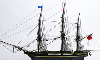
As an important port, Hull has seen a vast array of different vessels pass through its docks from massive sailing ships to small fishing boats. Hull museums collections are filled with objects illustrating the city's relationship with shipping and in fact, two of our nine venues, the Arctic Corsair and the Spurn Lightship, are vessels! Explore this section of our website to find out more.
 Hull Seamen's General Orphanage
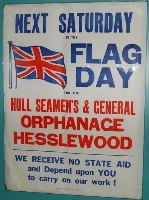
Hull Seamen's and General Orphan Society was established at Spring Bank in 1865. It was set up to house children whose fathers had been lost at sea.