Pressed Plants and Flattened Flowers
Hull Museums include several small herbaria collected by Robert Mortimer, Cecil Wright Mason and Eva Crackles. The collections contain specimens from North and East Yorkshire and include grasses, ferns, flowering plants and seaweeds. #SUBHEADING#What is a Herbarium?#SUBHEADINGEND# #IMAGE#A herbarium is a collection of dried plants and flowers mounted on paper, and stored, catalogued and arranged systematically for study. The word 'herbarium' was originally used to refer to a book about medicinal plants but its use widened to describe a general collection of dried plants. In the early 16th Century, Luca Ghini, a Professor of Botany at the University of Bologna, Italy, is thought to have been the first person to dry plants under pressure and mount them on paper to serve as a lasting record. This practice spread throughout Europe and by the 18th Century it was well established. There are four main types of herbaria; international, national, local and historical. These usually reflect the size of the collections and the areas or region from which they were collected. #SUBHEADING#Collecting Plants#SUBHEADINGEND# #IMAGE# Plant collections usually originate from expeditions undertaken by botanists (somebody who studies plants) or through an exchange with another collector. The specimens in a herbarium form a working reference collection used to identify plants and to study the relationships between different plant species. Each sample in a herbaria records information about where it was found, when it flowers and what it looks like. This information is enough for scientists to study the evolution of that species and can also help with conservation and ecology studies. #SUBHEADING#Medical Uses#SUBHEADINGEND# Herbariums also have a medical use with a long association between plants and medical treatments. One of the most effective painkillers today is morphine extracted from the plant Papaver somniferum (opium poppy). Herbaria have provided knowledge of the benefits and dangers of using the opium poppy and to note which part of the plant should be used and the season it should be harvested. #SUBHEADING#Preserving and Storing Specimens#SUBHEADINGEND# #IMAGE#The most common technique used to preserve a collection involves pressing and then drying the plants. Specimens are usually pressed, between sheets of blotting paper to absorb the moisture, and then dried under a low heat. This is usually done as soon as possible after the plant was collected to preserve its original shape and colour; essential for the accuracy and reference value of the collection. A final process, that has been introduced recently, is to place the specimens in a freezer for several days in order to kill any insects that may still be on the plants. Once the specimen has been preserved and identified they are then mounted on hard paper or card, known as herbarium sheets. Specimens are either strapped down with 'paper tapes', glued or stitched to the sheet. These sheets are then typically organised systematically, by family, genus and species. Delicate plant parts, such as flowers, fruits or seeds, not suitable for pressing can be preserved in spirit. These specimens are stored in jars of alcohol, used to prevent them from becoming brittle. View #LINK=http://www.hullcc.gov.uk/museumcollections/collections/search-results/resultsoverview.php?keywordsorig=plant&titleorig=&personorig=&placeorig=&dateorig=&materialorig=&accessionnumberorig=&collectionorig=&museumorig=&keywords=&newsearch=new&title=plant&person=&place=&date=&material=&accessionnumber=&collectionall=all&museumall=all&location=any&SearchSubmit.x=42&SearchSubmit.y=7TEXT=all of our herbarium collections# or use the advanced search.
 Eva Crackles 1918-2007
With a passion for botany and scientific precision, Eva Crackles collected specimens of flora from the East Riding for most of her life. The Herbarium she created is part of the Museum's collections, but what was the driving force behind it? The life of Eva Crackles can be explored here.
 Cecil Wright Mason (1884-1964)
With a passion for geology and natural science, Cecil Wright Mason collected specimens of natural history from the East Yorkshire region throughout his life. His extensive natural history collection is now part of the Hull Museums' collections. Read on to explore the history of his collection.
 Nature's Medicine Cabinet
Plants, herbs and spices have been used by humans for hundreds of years as natural medicines. It is believed that these traditional medicines are still used today as a complimentary method to synthetic medicines. Read on to find out more about the use of plants today as natural medicines.
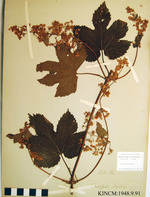 Sneezewort, Goat's Beard and Bog Bean
A herbarium is a collection of dried plants and flowers mounted on paper, and stored, catalogued and arranged systematically for study. This Gallery shows an example of some herbarium sheets found in the Museum's natural history collection.