Whaling Weapons
Catching whales was difficult and dangerous work. Getting close enough to the whale to get a line attached and then kill it was continually hampered by rough weather and fighting whales that would often dive below the ice to escape. As a result the whalers came to rely on the effectiveness and efficiency of their weapons. These weapons varied from hand held weapons to explosive devices. #IMAGE# #SUBHEADING#Hand harpoons#SUBHEADINGEND# The function of the harpoon is simply to fasten a line to the whale. The British 'iron' had two barbs each with a small reverse barb or 'stop wither'. The withers catch hold of the muscle fibres and tendons of the whale and prevent the harpoon from dragging out. Experiments with new types of gun common place but projecting a gun harpoon so that it entered the whale as nearly vertically as possible was problematic as a result the hand harpoon remained a popular weapon and was in use throughout the entire era of commercial open boat whaling. The Temple Iron became a popular harpoon with whalers. It was adapted by Lewis Temple, an American, in 1848. It was a simple design whereby a small wooden pin fastened a hinged barb to the harpoon, when the harpoon is drawn out of the whale the pin breaks and then the hinged barb swings outwards to hold fast. #IMAGE# #SUBHEADING#Harpoon gun#SUBHEADINGEND# The harpoon gun was first invented in 1731 but was not widely used until the nineteenth century. A gun harpoon was inserted into the barrel of the gun and once fired into the whale would serve the same purpose as the hand harpoon. Harpoons were often 'tagged' so that the identity of any particular harpoon could be verified in case the ownership of any whale was disputed. Usually harpoons were stamped with the name of the ship to which it belonged and often marked with the date. #SUBHEADING#Lances#SUBHEADINGEND# The lances were thrust into the whale's vital organs; a spout of blood form the blow hole would usually indicate the impending death of the animal. #SUBHEADING#Whaling crossbow#SUBHEADINGEND# The whaling crossbow was an enlarged version of the medieval weapon and has a swivel so that it could be mounted in a whaleboat. The crossbow was used as an alternative method to the early harpoon gun and from 1768-1788 the Society of Arts offered rewards for an improved crossbow. One of these crossbows survived and is currently on display in the Hull Maritime Museum. #IMAGE# #SUBHEADING#Bomb lance#SUBHEADINGEND# From the 1850's onwards shoulder guns were used to shoot bomb lances at the whales. The bomb lances were filled with explosives and would explode soon after entering the body of the whale. The Balchin bomb lance was fired from a swivel harpoon gun and was in use throughout the 1860's. It was made to be smaller in diameter to prevent it from sticking in the gun barrel. A cylinder containing a fuse match was inserted at the back of the lance and this was ignited when the main charge of the gun was fired. The match was designed to burn a certain length of time so that the lance explodes once it had hit the whale.
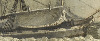 The Diana
At one time a great number of whaling ships and their crew set sail from Hull but that was all to change. In 1866 the Diana set sail on a whaling expedition but its perilous journey proved the dangerous nature of the occupation and the struggles faced by sailors. She became Hull's last whaling ship, read on to find out why.
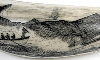 Whaling
The first whaling ships left the port of Hull in 1598, soon after the discovery of Greenland. The industry was thriving by the early nineteenth century after many recessions and revivals. During the years 1815-1825 Hull had 2000 men employed in the trade and she could boast over 60 whaling vessels making it the largest fleet in Britain. Using our important collections to illustrate, this section of our website explores Hull's whaling history from its peak to its decline in the mid to late nineteenth century.
 Truelove: From War to Whaler
The 'Truelove' was a barque obtained by the British during the American War of Independence. She was converted into a whaling ship and so began an illustrious and colourful history that saw her become the oldest surviving vessel of her class. Read about her successes with whaling, how she transported natives from Greenland, and her final visit back home to Philadelphia some 100 years after her 'birth' there.
 Hull and the Whaling Industry
At its height Hull could boast one of the largest and most successful whaling fleets in Britain. Discover how it all began, how the whalers' braved arctic conditions to catch their whales and how the introduction of steam powered vessels signalled a decline for the Hull whaler.
 Whaling Weapons
The methods used to catch whales did not vary much throughout the years but the weaponry evolved as whalers developed more efficient ways to kill their catch. Discover the different types of weapons used to catch whales from the simple hand harpoon to the explosive bomb lance.