What is scrimshaw?
#SUBHEADING#The art of the whaler#SUBHEADINGEND# Scrimshaw is the name given to a type of hand made craft created by carving the teeth and bones of whales and other marine mammals. The objects are largely the result of mariners being confronted with time to occupy at sea and access to a ready supply of materials. Sailing, especially whaling, involved long periods of time when there was nothing to do and so 'scrimshandering' (crafting scrimshaw) occupied the men and kept them out of trouble! #IMAGE# #SUBHEADING#Variety of objects#SUBHEADINGEND# The whalers produced a wide variety of objects, some were purely decorative and others had a function. Examples include walking sticks, ladles, toys and games, plaques, busks, tools and engraved whale teeth. The latter are the most common and recognised type of scrimshaw. Some scrimshaw was made to be used on board such as this seam rubber. This was a tool used in sail-making for producing sharp folds prior to sewing. Alternatively the mariner would create a token, from a tiny trinket box to a full sized busk (used to stiffen bodices), to take home to their wife or girlfriend. These keepsakes would be treasured by the receiver as the whalers could be away at sea for years at a time. #IMAGE# #SUBHEADING#Making Scrimshaw#SUBHEADINGEND# The process of making scrimshaw began by cleaning and polishing the bone or tooth. Sometimes rough shark skin was used as sandpaper to create the perfect surface for further decoration. The item was then cut, pierced or engraved. Early scrimshaw was decorated using crude sailing needles and this, plus the ability of the artist and the movement of the ship led to work varying in quality and detail. The designs etched into the object were then brought out by rubbing ink or carbon into them. Originally, candle black, soot or tobacco juice would have been used. When the excess was removed and the item polished, the designs were left black, or sometimes coloured if the artist had used coloured ink.
 Hull and the Whaling Industry
At its height Hull could boast one of the largest and most successful whaling fleets in Britain. Discover how it all began, how the whalers' braved arctic conditions to catch their whales and how the introduction of steam powered vessels signalled a decline for the Hull whaler.
 Whaling Weapons
The methods used to catch whales did not vary much throughout the years but the weaponry evolved as whalers developed more efficient ways to kill their catch. Discover the different types of weapons used to catch whales from the simple hand harpoon to the explosive bomb lance.
 The Diana
At one time a great number of whaling ships and their crew set sail from Hull but that was all to change. In 1866 the Diana set sail on a whaling expedition but its perilous journey proved the dangerous nature of the occupation and the struggles faced by sailors. She became Hull's last whaling ship, read on to find out why.
 Truelove: From War to Whaler
The 'Truelove' was a barque obtained by the British during the American War of Independence. She was converted into a whaling ship and so began an illustrious and colourful history that saw her become the oldest surviving vessel of her class. Read about her successes with whaling, how she transported natives from Greenland, and her final visit back home to Philadelphia some 100 years after her 'birth' there.
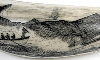 Whaling
The first whaling ships left the port of Hull in 1598, soon after the discovery of Greenland. The industry was thriving by the early nineteenth century after many recessions and revivals. During the years 1815-1825 Hull had 2000 men employed in the trade and she could boast over 60 whaling vessels making it the largest fleet in Britain. Using our important collections to illustrate, this section of our website explores Hull's whaling history from its peak to its decline in the mid to late nineteenth century.
 What is scrimshaw?
Sailors could be at sea for months at a time when searching the arctic seas for a catch. Inevitably they had time on their hands and a wealth of teeth and bones from marine animals at their fingertips - the result was the unique and fascinating craft of scrimshaw. Read on to find out more.
 The Scrimshanderer's Subjects
Scrimshaw was the sailor's art form. Carving the bones of their catches, they produced pieces which depicted a surprisingly wide variety of subjects. From real life observations to imaginary characters, religious tales to Greek myths. Read on to discover the mariner's motifs.
Whaling
The first whaling ships left the port of Hull in 1598, soon after the discovery of Greenland. The industry was thriving by the early nineteenth century after many recessions and revivals. During the years 1815-1825 Hull had 2000 men employed in the trade and she could boast over 60 whaling vessels making it the largest fleet in Britain. Using our important collections to illustrate, this section of our website explores Hull's whaling history from its peak to its decline in the mid to late nineteenth century.