1940s Fashion - 'Keep young and beautiful'
Britain may have been at War, suffering blitz, blackouts and shortages - but that was no excuse for Women to start neglecting their appearance! Even with their men away at war and their days spent working in factories or civil defence forces, magazines and advertising campaigns emphasised the importance for women to look their best. Cheerfulness and resolution were expected, and with clothes rationed or restricted for safety in the work place, hairstyles and makeup were seen as a way to brighten up the drabness of wartime clothes and express some individuality. The Hollywood Glamour of forties beauties such as Veronica Lake, Ingrid Bergman and Rita Hayworth set a high standard for women to follow, but despite shortages and extreme circumstances, a woman's duty to be beautiful was considered part of the war effort. #SUBHEADING# Hairstyles #SUBHEADINGEND# #IMAGE# Hairstyles of the forties required a lot of hairpins, setting lotion and patience! Hair was meticulously curled into small pin curls and set with lotion, to create waves, rolls and curls of complicated proportions! Those working in the armed forces were required to have a hairstyle that didn't touch their collar, and many women adopted 'Military' or 'Victory' styles which were quite short. For those working in factories long hairstyles were a safety hazard and girls wishing to copy Veronica Lake's seductive flowing locks soon found their way to the emergency department! The use of scarves, hairnets and turbans prevented these kinds of accidents. The 'Pageboy', (shoulder length hair curled under sometimes with a waved fringe) and the 'Pompadour' (a style with a high standing front section, usually achieved by backcombing or the use of padding) were both popular forties styles. #SUBHEADING# Make up #SUBHEADINGEND# Despite the extreme circumstances of war, women were urged to put their 'best face forward' and use beauty and cheerfulness to help boost Wartime morale. Although cosmetics were becoming scarce, magazines offered handy helpful hints on looking beautiful. Red lipstick and nails were the height of fashion, as were high arched plucked eyebrows. But like everything else, fresh supplies of make up were in short reserve, requiring economical and inventive use of make up already owned to make it last.
 Flirty Flapper Fashion
The 1920s saw a radical change to the fashionable silhouette. In contrast to the previous decades, the tightly corseted shape was abandoned in favour of the slim line boyish figure. Read on to explore the radical fashion of the daring twenties.
 The Mitchell Collection of Costume
The Mitchell Collection is one of the most extensive and impressive collections of costume Hull Museums' own. From corsets to capes and bodices to boots, the collection contains many exquisite examples of historic costume. Explore the history behind the collection and how it came to be in Hull Museums.
 1940s Fashion - Utility scheme
War time shortages had a big influence on fashion in the forties. Find out how the shortages in resources led to a government restrictive fashion scheme, which placed limitations on how clothes looked and how much material they could be made from.
 1940s Fashion - back to 'Civvie' Street
War time shortages had a big influence on fashion in the forties. Read on to discover how the term 'The Full Monty'' originated, and why Christian Dior's New Look caused such a stir after the war time restrictions placed on fashion.
 1940s Fashion - Rationing and Making do
War time shortages had a big influence on fashion in the forties. Discover how the government introduced a clothing rationing system, which meant people had to 'make do and mend' with the clothes they already owned.
 1940s Fashion - Hard times for fashion
War time shortages had a big influence on fashion in the forties. Discover the restrained and austere styles of the forties, looking at the main fashion features of the period.
 Singer sewing machine
No museum social history collection would be complete without one! It may be common, but its invention was a miraculous time saving device in the home. Read on to find out the history behind this 1917 Singer Sewing machine.
 Restrictive Fashion
For over 200 years women were required to wear corsets to mould their bodies. Find out how corsets were made and why corsetry and whaling were very intimately connected.
 Madame Clapham: Hull's Celebrated Dressmaker
Madam Clapham was Hull's most celebrated dressmaker. She established her business in 1887 in Kingston Square, and continued until her death in 1952. Read on to discover how she developed her dress making business, when she reached the height of her fame and how she became a Court dressmaker.
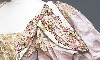 Costume and Fashion
Clothes and fashion are a part of our every day lives. The costume collections at Hull Museums contain over 6,000 items, ranging from bodices to boots and Gents waistcoats to whalebone corsets. The collection represents every major historical period; from the Georgian period to the last decades of the 20th century. This section explores the diversity and development of fashion, showing what we used to wear, where we used to wear it and how we used to live.