Nature's Medicine Cabinet
Many plants, herbs and spices are used by humans across the world as medicines. It has been estimated by the World Health Organisation (WHO) that approximately 75-80% of the world's population still use plant medicines instead of or as a complimentary method to synthetic medicines. #SUBHEADING#Plant Medicines#SUBHEADINGEND# Since prehistoric times plants have played an important role in medicine, and through observation and experimentation we have learnt which plants can help promote health and well-being. Information on plant medicines has been handed down over the centuries, based on the traditional practices of the Europeans, Chinese, Egyptians, American Indians and other cultures. Herbalism, also known as herbology or medicinal botany, is the traditional medical practice based on the use of plants and plant extracts. Although many plant medicines have not been scientifically verified, they are thought to cure a wide range of ailments from warts and boils to dandruff and loss of hair and even infertility. Among the most common traditional remedies used in Britain during the 1900's was the treatment for nettle stings and warts: #IMAGE# 'If you get stung by a nettle, take a dock leave (Rumex) scrunch it up and rub it on the sting to reduce pain and rash.' 'To treat a wart, rub the fury inside of a broad bean (Vicia faba) case on the wart.' British flora consists of about 1,600 species of which over 400 have been documented as having medicinal properties. Museum collections of flowers and plants in a herbarium can provide a database of the medicinal benefits and dangers of a plant, as well as noting which part of the plant should be used, the season it should be harvested and to ensure accurate identification. #SUBHEADING#An Alternative to Man-Made Drugs#SUBHEADINGEND# Those who believe in traditional plant remedies will often turn to them before using conventional medicines. For example, in Ghana, Mali, Nigeria and Zambia, 60% of children with high fever resulting from malaria use herbal medicines at home as the first line of treatment. #IMAGE#The use of traditional plant medicines in Europe, North America and other industrialised countries is rapidly increasing. Many use herbal remedies as a complementary or alternative method to modern medicines. However, for many people in developing countries, using traditional remedies are a necessity because they either lack access to essential medicines or cannot afford the high costs of pharmaceutical drugs. Many pharmaceutical drugs are in-fact made from plants or the properties of plants have inspired their development. For example, aspirin which is today synthesized inorganically was inspired in its development by the traditional use of the bark of willow Salix to treat fever. In some cases, chemicals are extracted from plants and used as chemical building-blocks which are then used as drugs. #SUBHEADING#Dangerous Effects#SUBHEADINGEND# The use of plants can be a danger to human health, if inappropriately taken. Some plants are toxic and even deadly to humans, but most have been identified through trial and error over the last millennia. Examples of highly toxic herbs include poison hemlock (Conium maculatum) and deadly nightshade (Atropa belladonna), their risks known due to European history associated with sorcery. #IMAGE#In addition to human safety there is a risk that a growing herbal market might pose a threat to biodiversity through over harvesting, leading to the extinction of endangered species and the destruction of natural habitats and resources. View #LINK=http://www.hullcc.gov.uk/museumcollections/collections/search-results/resultsoverview.php?keywordsorig=plant&titleorig=&personorig=&placeorig=&dateorig=&materialorig=&accessionnumberorig=&collectionorig=&museumorig=&keywords=&newsearch=new&title=plant&person=&place=&date=&material=&accessionnumber=&collectionall=all&museumall=all&location=any&SearchSubmit.x=42&SearchSubmit.y=7TEXT=all of our herbarium collections# or use the advanced search. Cures featured in this article should be used only with advice from a qualified medical herbalist. We hold no responsibility.
 Pressed Plants and Flattened Flowers
People collect many different things, and at Hull Museums we own many herbarium collections of dried plants and flowers that have been collected from individuals across East Yorkshire. Read on to find out what a herbarium is, and how plants are preserved and stored in our collections.
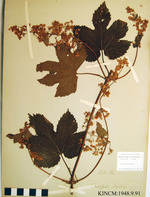 Sneezewort, Goat's Beard and Bog Bean
A herbarium is a collection of dried plants and flowers mounted on paper, and stored, catalogued and arranged systematically for study. This Gallery shows an example of some herbarium sheets found in the Museum's natural history collection.
 Eva Crackles 1918-2007
With a passion for botany and scientific precision, Eva Crackles collected specimens of flora from the East Riding for most of her life. The Herbarium she created is part of the Museum's collections, but what was the driving force behind it? The life of Eva Crackles can be explored here.
 Cecil Wright Mason (1884-1964)
With a passion for geology and natural science, Cecil Wright Mason collected specimens of natural history from the East Yorkshire region throughout his life. His extensive natural history collection is now part of the Hull Museums' collections. Read on to explore the history of his collection.
 159 Woodhouse Lane
Mr Walter Thomas Castelow's shop at 159 Woodhouse Lane was the oldest surviving chemist shop in Leeds when it was demolished for the redevelopment of the University in 1976.