Cecil Wright Mason (1884-1964)
Cecil Wright Mason, born in 1884, was a native to Hull. He was an engineer with the Yorkshire Water Authority and had a particular interest in hydrogeology. In his spare time he was also the photographic recorder and excursions secretary for the Hull Geological Society. #SUBHEADING#A Passion for Natural History#SUBHEADINGEND##IMAGE# Over the years and the many field excursions he undertook, Mason collected geological and natural history specimens from the East Yorkshire region, as well as taking hundreds of photographic slides for the Hull Geological Society. Material from Mason's collection was donated to Hull Museums in 1962. This gift included specimens of mammoth teeth, tusks and bones. #SUBHEADING#Bringing Together his Collections#SUBHEADINGEND# In 1962 a natural history collection formed by the late T. B. Parks was also received. This included about 50 specimens gathered mostly from Kelsey Hill and Brandesburton gravels, along with some Cretaceous invertebrates which were originally collected and prepared by Mason. Parks and Mason were close colleagues and members of the Hull Geological Society. Indeed, a series of photograph albums donated by Mr and Mrs C. M. Parks show many historic Lincolnshire buildings, many of them having been taken by Mr. Mason. #SUBHEADING#The Final Assemblage#SUBHEADINGEND# #IMAGE#In 1964, following Mason's death, a further donation was made by his widow Mrs. L. Mason. This gift consisted of over 100 local geology and natural history specimens, including seaweed specimens preserved on card and in small glass tubes. His archive of fine glass lantern slides, taken on field excursions, was also donated. Today, Mason's geological and natural history specimens remain some of the best preserved items in Hull Museums' Natural History Collections. View all of the #LINK=http://www.hullcc.gov.uk/museumcollections/collections/search-results/resultsoverview.php?keywordsorig=&titleorig=&personorig=&placeorig=&dateorig=&materialorig=&accessionnumberorig=&collectionorig=&museumorig=&keywords=&title=&person=&place=&date=&material=&accessionnumber=&collection7=CW+Mason+Collection&museumall=all&location=any&SearchSubmit.x=11&SearchSubmit.y=16TEXT=Cecil Wright Mason Collection# or use the advanced search.
 Our Natural World
Hull Museums own over 20,000 natural history specimens ranging from pressed plants to stuffed animals to fossilised creatures. Read on to discover what weird and wonderful objects are lurking in our natural history collections.
 What is a fossil?
Fossils are the preserved remains of once living animals and plants. Hull Museums own a variety of fossils from shells to woolly mammoth bones. Read on to find out about the different types of fossils you can find and how they are formed.
 Spineless Creatures (part 1)
If you go swimming in the sea today you will recognise a great variety of invertebrate marine life, from crabs and lobsters to corals and shelled-animals. They have evolved over time from animals you may not be familiar with. Read on to discover more about invertebrate marine life used to exist millions of years ago including ammonites, belemnites and bivalves.
 Spineless Creatures (part 2)
If you go swimming in the sea today you will recognise a great variety of invertebrate marine life, from crabs and lobsters to corals and shelled-animals. They have evolved over time from animals you may not be familiar with. Read on to discover more about invertebrate marine life used to exist millions of years ago including brachiopods, crinoids, echinoids and trilobites.
 Pressed Plants and Flattened Flowers
People collect many different things, and at Hull Museums we own many herbarium collections of dried plants and flowers that have been collected from individuals across East Yorkshire. Read on to find out what a herbarium is, and how plants are preserved and stored in our collections.
 Nature's Medicine Cabinet
Plants, herbs and spices have been used by humans for hundreds of years as natural medicines. It is believed that these traditional medicines are still used today as a complimentary method to synthetic medicines. Read on to find out more about the use of plants today as natural medicines.
 Sneezewort, Goat's Beard and Bog Bean
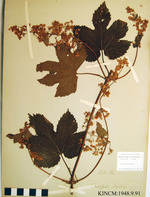
A herbarium is a collection of dried plants and flowers mounted on paper, and stored, catalogued and arranged systematically for study. This Gallery shows an example of some herbarium sheets found in the Museum's natural history collection.